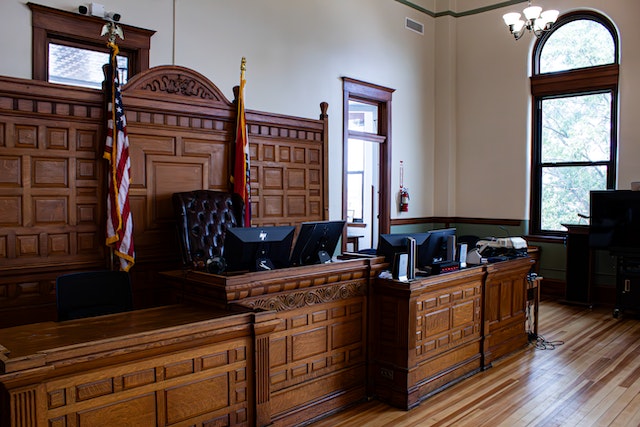
If you have to go in front of the Patent Trial and Appeal Board (PTAB) in California, it’s important to understand how this process works, the types of matters handled by the PTAB, and how these differ from traditional trials. This board can make decisions that have enormous consequences for patent holders, including patent rights, validity, and business interests. As such, working with an Orange County, California patent lawyer can help you if you have to appear in front of this board and defend your intellectual property.

What Is the Patent Trial and Appeal Board?

The Patent Trial and Appeal Board, often called the PTAB, is an administrative section of the United States Patent and Trademark Office (USPTO). This board handles patent disputes, reviews examiner decisions, and determines the validity of issued patents. While the PTAB does function similarly to a court, the process is focused solely on patent law, and the Administrative Patent Judges have both technical and legal expertise.

The PTAV generally handles Inter Partes Reviews, Post-Grant Reviews, and patent appeals from USPTO examiner rejections. These claims often remain enforceable and can considerably impact ongoing litigation, licensing rights, and the overall value of a company’s intellectual property portfolio.

Key Types of PTAB Proceedings

  • Inter Partes Review (IPR): Disputes regarding the validity of an issued patent based on prior patents or publications
  • Post-Grant Review (PGR): Allows broader patent validity challenges shortly after a patent was granted
  • Covered Business Method Review (CBMR): Previously used for certain financial business method patents
  • Ex Parte Appeals: Appeals filed after an examiner rejects an application
  • Derivation Proceedings: Resolves disputes surrounding inventorship claims

Why the PTAB Matters to Patent Owners

  • PTAB decisions may invalidate some or all patent claims
  • Businesses frequently rely on PTAB proceedings during high-stakes patent disputes
  • PTAB reviews are typically faster and less expensive than federal court litigation
  • A successful PTAB challenge may significantly impact licensing and patent enforcement rights

What Is the Role of the Patent Trial and Appeal Board in Disputes?

The Patent Trial and Appeal Board focuses on resolving any disputes relating to patents. It functions much as a court would, and it can handle different kinds of cases relating to patents.

The PTAB might hear a challenge to the validity of a patent based on the existence of previous patents and works, with someone arguing that an invention is not novel or non-obvious enough to deserve protection. These proceedings generally involve expert technical evidence, legal briefings, and examinations of prior art.

Common Reasons Patents Are Challenged

  • Alleged prior art has disclosed the invention
  • Claims may be considered obvious on existing technology
  • The claims in the patent are too broad
  • The patent application lacks sufficient detail
  • Competitors who seek to invalidate patents during disputes

Industries Often Involved in PTAB Cases

  • Software and technology
  • Aerospace and engineering
  • Consumer electronics
  • Manufacturing

Statistics and Trends

  • Thousands of PTAB petitions and patent appeals are filed with the USPTO each year
  • IPR proceedings are the most common form of PTAB proceedings
  • PTAB outcomes may influence parallel federal court outcomes

How Do Proceedings in Front of This Board Differ From Federal Court Cases?

The PTAB is like a court, but there are some key differences. While these can resemble traditional litigation, they still adhere to unique procedural rules and timelines.

The PTAB strives to make a decision quickly, at least compared to the pace of the courts. 12 months is usually the goal, although an extension to 18 months is possible.

Important Differences Between PTAB and Federal Court Litigation

  • PTAB judges have considerable expertise in technology
  • PTAB is generally a faster process
  • Discovery is typically limited
  • Proceedings focus on written briefs
  • Different evidentiary standards often apply

Why PTAB Expertise Matters

Administrative Patent Judges generally possess highly specific technical knowledge in engineering, science, and technology, making them uniquely suited to handling these decisions fairly. As such, arguments must be precise and well-supported.

PTAB Timeline

  • The petition is filed
  • Preliminary responses are submitted
  • PTAB determines if the review will continue
  • Written briefs and evidence are submitted
  • Oral hearings are scheduled
  • Issuance of final written decisions

What Should I Do Before Going in Front of the Patent Trial and Appeal Board?

If you are going to meet with the PTAB, you should take some steps to prepare yourself.  These involve highly technical evidence and strict deadlines, making adequate preparations critical.

Important Steps to Prepare for PTAB Proceedings

  • Learning about the PTAB processes and timelines
  • Seeking out experts who can testify on your behalf
  • Reviewing other similar PTAB cases and decisions
  • Organizing your support documentation and prior art analysis
  • Evaluation of litigation risks and potential impacts on your business

Then it’s a good idea to talk to a lawyer who is experienced in these matters.

Talk to an Orange County Patent Attorney Today

If you have business before the PTAB, you should make sure that you’re ready to make the best possible impression.  A seasoned attorney from Burns Patent Law can help you make a compelling case to the Patent Trial and Appeal Board. We have experience with this, and we know what kinds of things the PTAB is looking for. Contact Burns Patent Law and schedule a consultation. We would be happy to tell you more about how we can be of assistance.